Private Driving Instructor Singapore: Flexibility & Benefits


Discover the advantages of hiring a private driving instructor in Singapore. Enjoy flexible lessons, personalized coaching, and increased pass rates. Ideal for busy learners seeking a tailored approach to obtaining a driving license.
Private Driving Instructor Singapore: Benefits and Tips
Getting a driving license in Singapore can feel like a long, costly maze. You need theory tests, a Provisional Driving Licence, simulator work, circuit practice, road lessons, and the Traffic Police practical test.
A private driving instructor in Singapore can offer a more flexible and personal route, especially if lessons must fit work, school, or family time. The best choice is not just private is cheaper or school is safer. It depends on your schedule, budget, learning style, test centre, and whether you want Class 3 or Class 3A.
Why hire a private driving instructor?
A private driving instructor gives direct coaching from the same person. You often get more control over timing and pace than in a driving school.
For learners with evening, weekend, or odd slots, private driving lessons can help build rhythm instead of leaving long gaps.
In Singapore, private instructors are tied to one of the three driving centres, so students can use places like the driving circuit. Traffic Police also posts pass-rate data so learners can compare choices.
The biggest gain is routine. One instructor sees your habits over many lessons: late mirror checks, weak braking, nervous lane changes, poor clutch control, or shaky parking. Instead of repeating the same module with a new teacher, a private driving instructor can plan the next lesson around what you need.
That matters because driving is not just about covering topics. It is about turning actions into calm habits. A good instructor knows when you are ready for traffic, when you need more circuit work, and when road skill is ahead of test skill. For many learners, that close feedback loop is the real edge of private driving lessons in Singapore.
Private vs school driving: which route suits you better?
Private vs school driving comes down to trade-offs. Private lessons give more scheduling freedom and one-to-one coaching, while a driving school gives a set course, in-house systems, and more admin support. Singapore learners start through BBDC, CDC, or SSDC; after passing the right tests, they can apply for a valid Singapore Driving Licence.
A learner at a driving school in Singapore usually follows a clear path. That can help if you want the centre to guide you through theory classes, practical stages, simulator work, internal checks, and test booking. Schools also have on-site facilities and booking systems that reduce guesswork for first-time learners.
The private route is more self-directed. You still deal with a driving centre for tests, accounts, simulator or circuit access where needed, but your day-to-day learning is with your instructor. That is why searches such as private driving school in Singapore or private driving licence in Singapore can be misleading: private learners are not skipping the official system; they are still doing the required Traffic Police and centre steps.
Factor | Private driving instructor | Driving school |
Lesson style | More tailored; same instructor often | Set course; instructor may change |
Scheduling | Flexible if the instructor has slots | Depends on school slots and rules |
Admin support | Varies; you may handle more yourself | Usually clearer step-by-step help |
Circuit access | Arranged through the instructor/centre link | Built into the centre's system |
Learning pace | Can focus on weak areas | Usually follows course stages |
Best for | Busy learners, steady coaching, self-starters | Learners who want structure and centre support |
Neither route guarantees a pass. The better question is whether your route helps you practise often, fix mistakes early, and reach the practical test with safe, repeatable habits.
The personal coaching edge
A private driving instructor sees more than whether you can park once. They can spot patterns: early steering in vertical parking, late lane checks, hard braking, or missed blind-spot checks. Because lessons are one to one, feedback can be clear and fast.
This is especially useful for nervous learners. Some students freeze when another road user honks; others rush because they feel they are holding up traffic. A patient driving instructor in Singapore can break those moments into simple cues: check, signal, mirror, blind spot, then move only when safe. That kind of repeat work builds confidence without pretending the road is easy.
Private coaching also helps with target practice. If your circuit work is steady but road judgment is weak, your instructor can spend more time in real traffic. If your road driving is smooth but you lose marks in crank course, slope, directional change, or parking, more lessons can focus on circuit practice.
Flexibility can cut dead time
Many learners choose private driving lessons in Singapore because standard centre slots do not fit their lives. Working adults may only be free after office hours. Students may want intensive practice during holidays. Parents may need lessons around childcare windows. A private instructor with open slots can cut the gaps between lessons.
When gaps are too wide, you spend the first part of each session re-learning old work. Regular practice helps your footwork, steering, mirror habit, and lane sense become automatic. Even if your full timeline still depends on test slots and readiness, fewer long breaks make the learning path feel less broken.
Traffic Police posts waiting-time data for theory and Class 3/3A tests at the three centres, and the figures can change by centre, month, class, and private or school category. The SPF page shows Class 3 and Class 3A waiting times by centre for recent months, so check the latest data before you assume one route is always faster.
Cost control depends on how you learn
Many people compare the cost of driving lessons in Singapore and assume private is always cheaper. That is not always true. Your total cost depends on hourly rate, circuit fees, account fees, simulator costs, test-day rental, warm-up charges, and how many lessons or retests you need.
Private rates vary. Some 2026 cost guides put private road lessons in the lower-to-mid double digits per hour, while circuit lessons and test-day packs cost more because they use centre cars and facilities. Fees also change, so treat any online quote as a starting point, not a final budget.
The real savings come from efficient learning, not just a low hourly fee. A cheap lesson that leaves you confused can cost more later.
Before you book, ask for a full fee list: hourly road lesson rate, circuit lesson rate, instructor fee, centre account fee, simulator fee, test booking fee, vehicle rental, warm-up fee, cancellation rules, and minimum lesson length. If needed, ask about a CDC private account or other centre account. This helps prevent surprises near the Traffic Police test, when learners are already under pressure.
Pass rates help, but they do not tell the whole story
Pass rates help, but they do not tell the whole story. SPF posts 12-month passing data and says it helps learner motorists make a better choice when they select a driving centre or private driving instructor. The page also says Other Candidates refers to learners under private driving instructors.
Pass rates need context. A private instructor with very few students may show a very high or low percentage because one result can move the number a lot. A full-time instructor may handle many more test candidates. Some instructors take more nervous beginners; others teach learners who already have overseas experience or past attempts.
Use pass rates as a filter, not a final verdict. If you are looking for a good private driving instructor in Singapore, compare the pass rate with sample size, communication style, availability, location, and whether students feel ready rather than rushed.
Choosing between Class 3 and Class 3A
Your Singapore driving licence class changes both training and instructor choice. Class 3 is for manual cars. Class 3A is for automatic cars, and BBDC says it covers automatic motor cars without a clutch pedal, within vehicle limits. If you want an auto car licence in Singapore for daily use, Class 3A may be enough.
A class 3 private instructor should teach clutch control, biting point, gear choice, slope control, and smooth manual driving under traffic. Manual learners often need more time to make gear changes smooth while still watching the road.
For Class 3A, the car is simpler to run, so you can spend more focus on observation, position, speed, and test discipline. That does not make Class 3A easy. You still need safe judgment, good mirror habits, and precise control in circuit stations.
Ask the instructor which class they teach, which centre they are tied to, and whether their car fits your licence path. A mismatch wastes time before you start.
How to get driving license in Singapore with a private instructor
To get a car licence in Singapore through the private route, you usually enrol with a driving centre as a private learner, choose a licensed private driving instructor, complete the required theory and practical steps, pass the Traffic Police practical test, and then apply for the Qualified Driving Licence. SPF says Singapore citizens, Permanent Residents, and certain foreigners need a valid Singapore Driving Licence to drive or ride on Singapore roads, and training starts through one of the three approved driving centres.
Choose Class 3 or Class 3A. Decide whether you want manual flexibility or an automatic-only path.
Pick a test centre. Your instructor will usually have ties to BBDC, CDC, or SSDC, so location matters.
Open the right private learner account. For example, CDC learners may need a CDC private account, and BBDC learners should check the BBDC private instructor route.
Pass the Basic Theory Test. This is required before you can apply for a Provisional Driving Licence.
Apply for your PDL when you qualify. You need a valid PDL before you drive on public roads as a learner.
Start practical lessons. Your instructor should cover road basics, safety routines, circuit stations, and test routes.
Complete any simulator or centre parts. Requirements can change, so check the latest rules from your driving centre.
Pass the Final Theory Test and practical test. Your instructor can tell you when you are ready.
Apply for your Qualified Driving Licence. After you pass the required tests, you can apply through the official process.
The exact order can change based on your past licence history, centre rules, and current law. Always confirm with the driving centre rather than relying only on old forum posts.
How to choose a good private driving instructor in Singapore
Choose a private instructor by checking official pass-rate data, making sure the instructor is licensed, asking for clear fees, testing communication, and confirming availability before you pay a deposit. SPF publishes a list of private driving instructors and passing-rate tables for Class 3 and Class 3A, which gives learners a safer starting point than random ads.
Start with the official list of private driving instructors.
Match the instructor to your centre.
Check the class taught.
Ask about student load.
Request a full fee list.
Discuss teaching style.
Take one trial lesson before you pay more.
If you want a private driving instructor that Singapore learners trust, do not start with social media clips or old screenshots. Start with the official list, then compare the instructor's centre, class, price, and style.
During the first lesson, notice whether the instructor explains why mistakes happen. Saying you are wrong is not enough. A good instructor tells you what to do next time: slow earlier, check the mirror before signalling, keep the car straighter before reversing, or look further ahead before changing lanes.
Red flags to avoid
Private driving lessons can be excellent, but quality varies. Be careful if an instructor will not explain fees, pushes you to pay a large non-refundable sum right away, avoids questions about centre ties, or gives vague answers about lesson timing.
Be wary of any promise of a guaranteed pass. No instructor controls test-day traffic, your nerves, or the examiner.
Poor lesson structure is also a red flag. Private learning should not mean random driving with no plan. Your instructor should be able to tell you what you've learned, what's left, and if you're ready for the test.
Communication matters too. If you dread every lesson because the instructor shouts, mocks, or distracts you, your learning will suffer. Driving needs calm. The instructor's job is to build safe habits under pressure, not to make you fear the driver's seat.
Making the most of private driving lessons
The learner still carries responsibility. A strong instructor can guide you, but you must prepare, revise, and practise between lessons. Before each session, review what went wrong last time and arrive with one or two focus areas.
keep a simple lesson log with date, topic, weak points, and next focus;
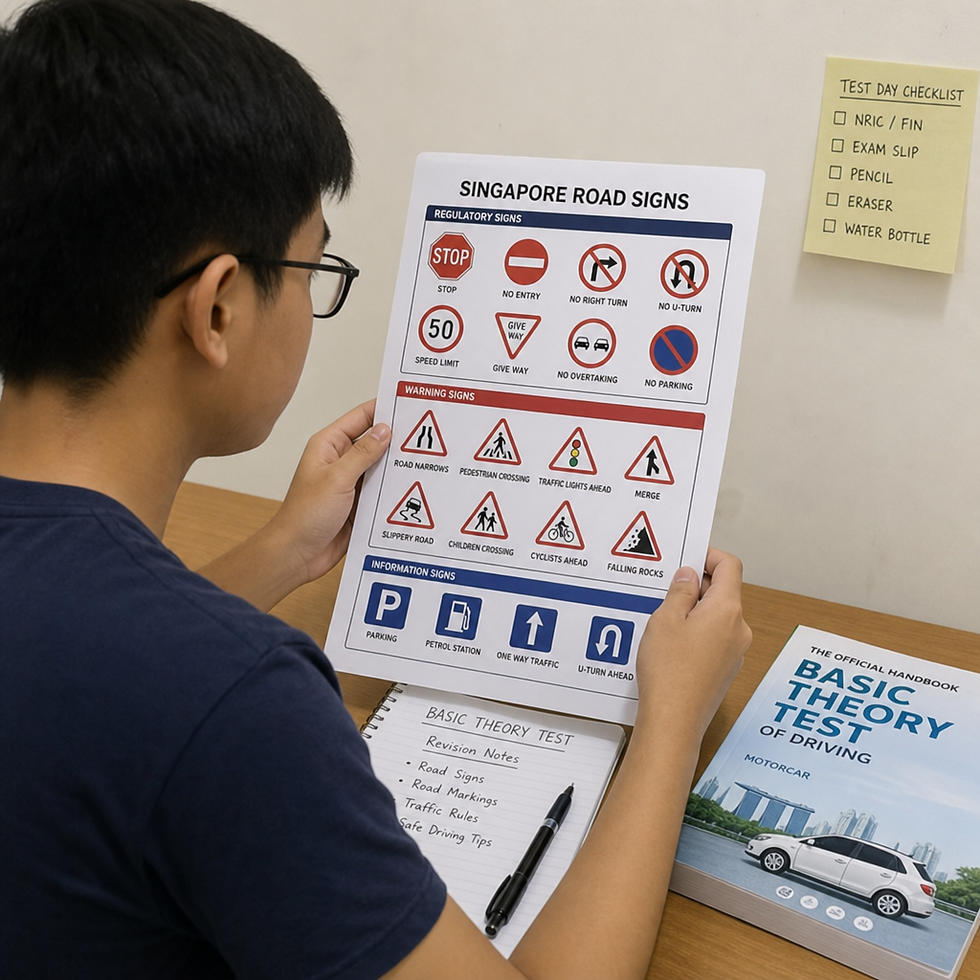
revise road signs, right-of-way rules, and test requirements between practical sessions;
ask your instructor to explain common immediate-fail mistakes;
practise observation routines out loud until they feel natural;
schedule lessons close enough together to keep muscle memory;
ask for extra circuit work if parking or directional change stays weak;
take a mock test only when your instructor says your basics are steady;
do not book the practical test just because a slot is open.
If the same mistake keeps coming back, treat it as a pattern. One missed blind-spot check may be a lapse. Five missed checks mean you need to rebuild the routine from the start.
Private instruction works best for self-directed learners
Private instruction works best for learners who want flexibility but can handle their own admin. You may need to track account validity, theory bookings, PDL status, simulator progress, test dates, and fee payments. If that feels stressful, a driving school may suit you better even if it costs more or has less flexible slots.
On the other hand, if you are organised and value steady coaching, private instruction can be a strong fit. You can build a working bond with one instructor, focus lessons on weak spots, and skip areas you have already learned.
This is the core benefit: private learning feels more human. Instead of adapting to a system every week, you work with someone who knows your habits, confidence level, and test readiness.
The takeaway
Hiring a private driving instructor can be a smart route to a driving licence in Singapore with more flexibility, personal coaching, and control over lesson pace. It is especially useful if you want steady feedback, need lessons around a busy schedule, or prefer a more tailored path than a standard driving school.
Still, the best private driving instructor is not just the cheapest or the loudest in ads. Review pass-rate data, verify instructor's license, compare costs, and select a calm, skilled teacher for safe driving. Whether you choose private driving lessons or a driving school, the goal is the same: pass well and drive well after the test.
Q&A
Question: Is hiring a private driving instructor always cheaper than enrolling in a driving school?
Short answer: Not always. Private lessons can have lower hourly rates, but total cost also depends on circuit fees, simulator work, test-day rental, warm-up fees, account fees, and retests. Real savings come from efficient learning, not just the lowest hourly rate.
Question: Does learning privately mean bypassing Singapore's official driving licence process?
Short answer: No. Private learners still follow the Traffic Police and driving-centre steps, including theory tests, a Provisional Driving Licence, practical training, any required simulator or centre work, and the practical test. Private instruction only changes how the road lessons are handled.
Question: Who is most suited to the private driving instructor route?
Short answer: It suits learners who need flexible timing, want one-to-one coaching, and can manage their own admin. It works best for organised, self-directed learners who can track bookings, fees, PDL status, simulator work, and test readiness.
Question: How should learners evaluate a private driving instructor before committing?
Short answer: Check SPF pass-rate data, verify the licence, confirm the centre tie, ask for a full fee list, and discuss teaching style and availability. A trial lesson can also show timekeeping, patience, clarity, lesson structure, and vehicle condition.
Question: How does choosing Class 3 or Class 3A affect the instructor selection?
Short answer: Choose an instructor who teaches the right class and has the right car. Class 3 covers manual driving skills such as clutch control, gear choice, and slope control, while Class 3A focuses on automatic cars. The choice changes both the training and the car you can drive after you pass.